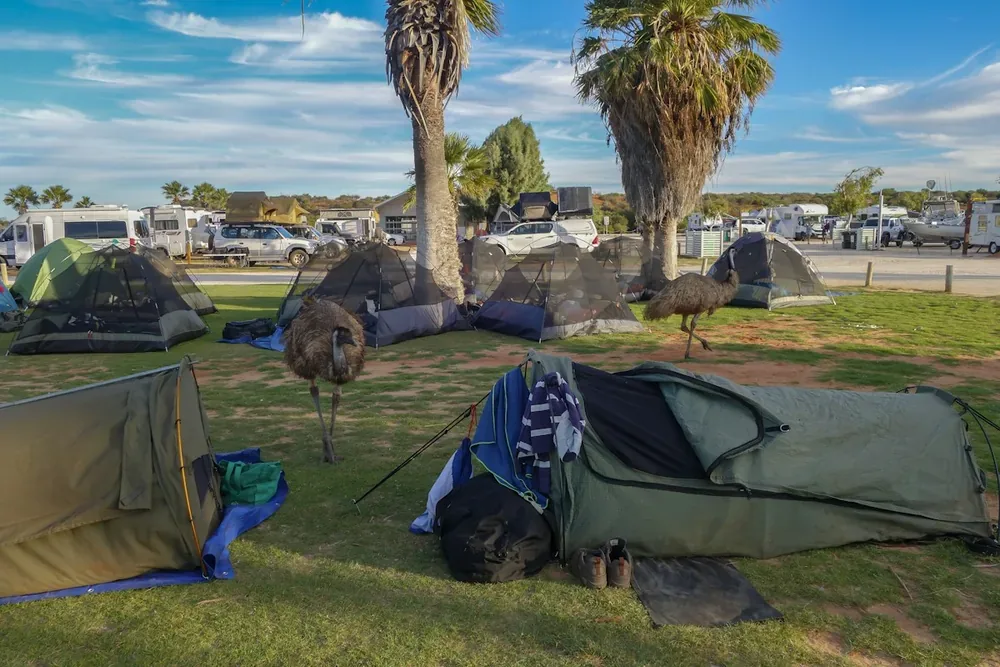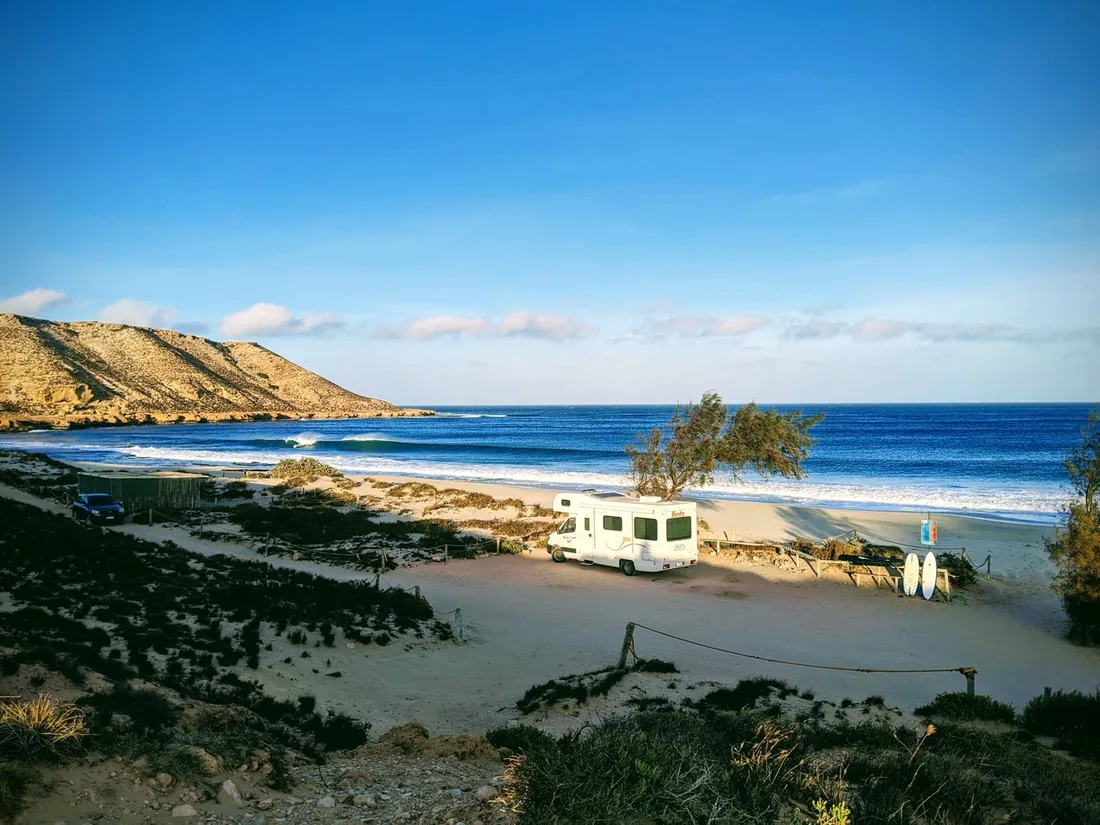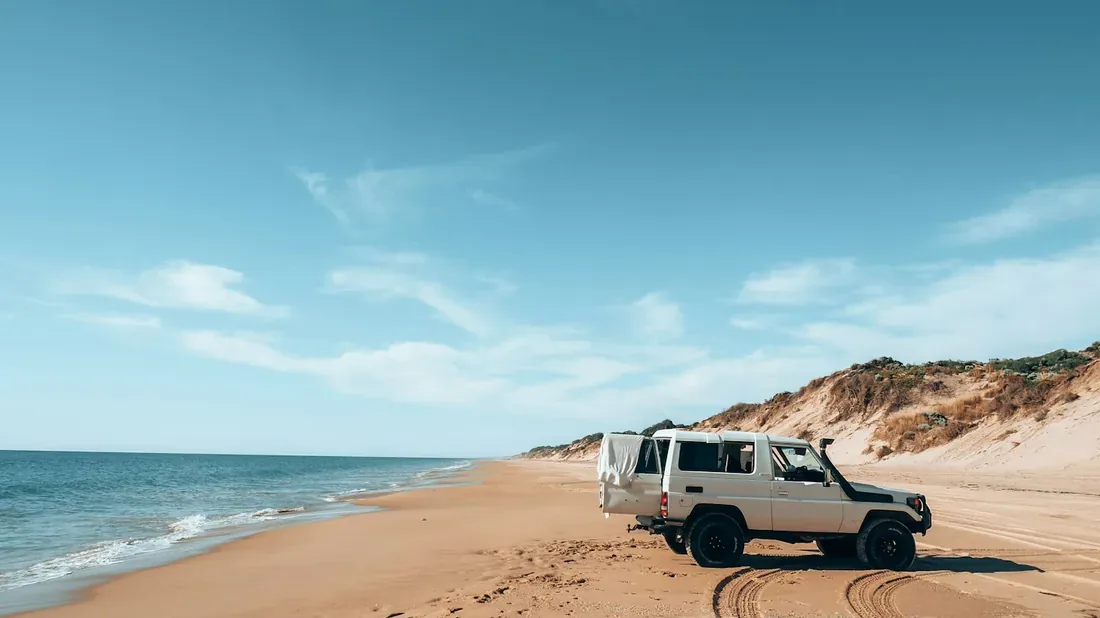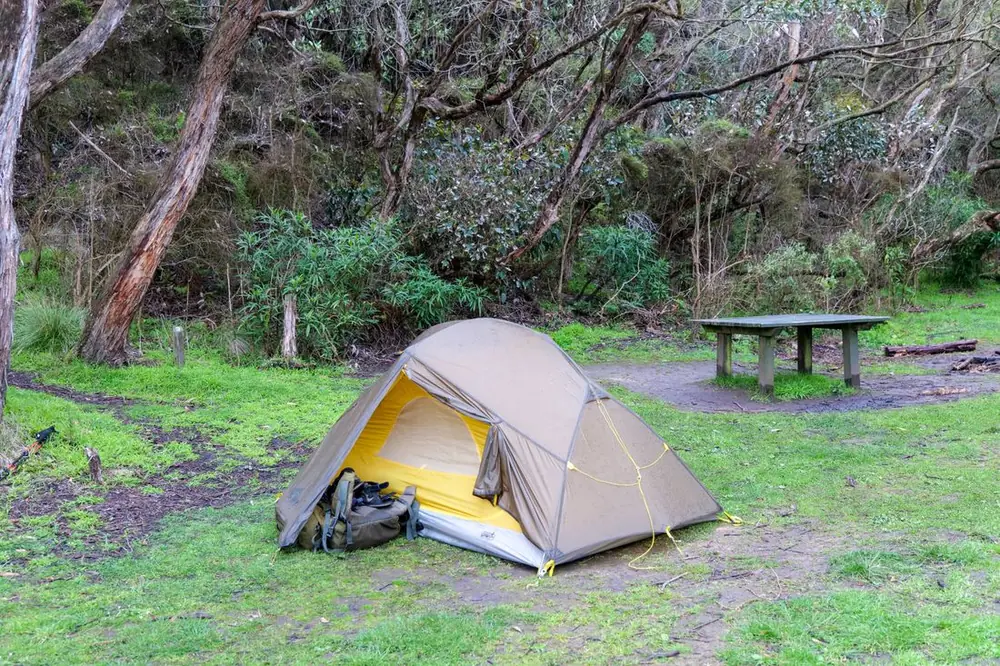
Looking at one region? Our dog-friendly camping in the South West guide goes into more detail for that part of the State.
The short version
- Pets are generally not allowed in WA’s parks. Bringing an animal onto land DBCA manages is an offence under the Conservation and Land Management Act 1984.1
- DBCA lists 16 campgrounds where you can camp with a dog. The dog must be controlled and on a lead at all times.1
- In towns, the Dog Act 1976 says a dog in a public place must be held by someone who can control it, and each council decides where dogs are banned or can run free.2
- 1080 poison baits kill dogs. DBCA signs the areas “1080 POISON RISK”.3
- Caravan parks and private campgrounds make their own dog rules, so ask the park before you book.
The park rule
The Parks and Wildlife Service (DBCA) says pets and other domestic animals are generally not permitted in parks. It says it is an offence to bring an animal onto land and waters it manages under the Conservation and Land Management Act 1984, and that penalties apply. The page does not give amounts.1
DBCA lists a few exceptions:
- Assistance animals that are certified as trained, or approved, can go into parks.1
- Designated dog areas. Dogs are allowed, but must be on a lead at all times. In signed dog exercise areas the dog can be off the lead, but must be under your control at all times.1
- Driving through. If there is no other practical route, the dog can cross a park inside the vehicle. You must not stop in the park.1
- Marine parks. An animal may travel by boat, but must not get on or off the boat inside the marine park or reserve.1
DBCA gives four reasons for the rule: pets stress native animals, poison baits kill pets, pets are at risk of snake bites, and kangaroos and goannas may defend themselves and injure a dog.1
Campgrounds that allow dogs
Where you can camp with a dog, DBCA says it must be controlled and kept on a lead at all times. Dogs are allowed only in particular places or campgrounds, not throughout the park.1 On 29 October 2026 DBCA’s list named these campgrounds:1
- Blackwood River National Park: Big Brook Arboretum and Sues Bridge.
- Lane Poole Reserve: Warner Glen, Baden Powell, Charlies Flat, Chuditch, Nanga Brook, Nanga Mill, Nanga Townsite, Stringers, Tonys Bend and Yarragil.
- Logue Brook: Logue Brook.
- Rapids Conservation Park: Canebrook Pool and Stockton Lake.
- One Tree Bridge: Greens Island Campground.
We list them as DBCA does and have not visited them. Open DBCA’s page for the current list, then read the campground’s own page for fees, booking and rules.
Council beaches, reserves and the Dog Act
Beaches, foreshores and reserves in and around towns are usually looked after by the local council. The Dog Act 1976 says a dog in a public place must be held by a person capable of controlling it, or securely tethered for a temporary purpose. Councils can specify dog exercise areas, places where dogs are banned, and rural leashing areas. In the version we read, the fine for breaking the leash rule is $5,000.2
Outside the Perth metropolitan region and townsites, the leash rule applies only in places a council has specified as a rural leashing area. In those open places the Act still expects a competent person to supervise the dog and carry a lead.2
The City of Busselton shows how much one council can vary. It says dogs must be on a lead on its footpaths and shared paths, and are banned from the Busselton Jetty, children’s playgrounds and Meelup Regional Park, apart from the Eagle Bay dog exercise beach. Its beaches fall into three groups: dogs banned at all times, off the lead at all times, and off the lead with seasonal limits. It does not manage dogs on State Government beaches and sends those questions to the Parks and Wildlife Service.4
Every council is different, so search the council’s name and “dog exercise areas”, then follow the signs on the day.
Poison baits (1080)
DBCA’s Western Shield program lays meat baits containing 1080 to control foxes and feral cats. DBCA says 1080 kills dogs, and that risk areas must be treated as dangerous for cats and dogs at all times. If a dog eats a bait, take it to a vet immediately.3
The program covers about 4.7 million hectares of DBCA-managed and nearby land. Risk areas are signposted “1080 POISON RISK”. DBCA’s map does not show every area, so for DBCA-managed land ask the local DBCA district office.3 The Department of Primary Industries and Regional Development (DPIRD) also describes 1080 as a risk to domestic pets, and publishes a pet owner factsheet.5
Heat and your dog
DPIRD’s welfare standards for dogs say a dog must not be left unattended in a vehicle where it is at risk of heat stress. The guidelines add that a closed vehicle in full sun can reach 50 degrees in under 15 minutes, and that open windows, shade or a sun shade do not make it safe. They suggest walking dogs early in the morning or late in the evening when it is warm.6
At camp, that means shade and water that cannot be tipped over, and not leaving the dog in the car or tent while you head to the beach.
Snakes
DBCA lists snake bites as one of the risks to pets in parks.1 If a person is bitten, healthdirect says to keep them still and calm, call triple zero (000), and bandage the limb firmly from the fingers or toes upwards. It says not to wash the bite, cut it, use a tourniquet or try to catch the snake.7 We do not give first aid advice for dogs. Ask your vet before you go, and save the number of an emergency vet near where you are camping.
Caravan parks and private campgrounds
Holiday parks, caravan parks and farm stays set their own dog rules. Some allow dogs, some do not, and some add conditions. Rules vary by park, so ask the park before you book:
- Are dogs allowed on the site I am booking?
- Do they need to be on a lead the whole time?
- Is there a limit on the number, size or breed?
- Is there an extra fee?
- Where can I walk my dog?
On our Camping near pages, a place shows “Dogs allowed” only if its source record says so, and that record is an unverified suggestion until someone has checked it. Use the “Dogs OK” filter as a starting point, then confirm with the park.
How Trek Eleven helps
Trek Eleven is a free camping app for all of Australia. For Western Australia, here is what it does today:
- You can browse the map and lists with no account.
- Campsites and caravan parks from open data appear as suggestions, with a “Dogs OK” filter where the source record says so.
- Every fact shows where it came from and when. A place no one has checked says so plainly.
- Saved and recently viewed places open with no signal. Offline maps are coming soon.
- If something is wrong or closed, you can report it from the place page.
Browse the South West, Perth and Peel, the Mid West and Coral Coast, the Pilbara, the Kimberley or the Goldfields and Nullarbor, or start with Busselton, Margaret River, Albany or Geraldton. For fire bans and campfire rules, see camping in the WA fire season, and for where you can stay at all, free camping in WA. Looking near the city? See dog-friendly camping near Perth. Travelling east with your dog? See dog-friendly camping in NSW and dog-friendly camping in Victoria.
Find places near you
Our Camping near pages list the campsites, caravan parks and rest areas on record near each town, from open data. Each place says whether Trek Eleven has checked it, and unchecked places are only suggestions. They do not say that camping is allowed, free or open, so read the sources above first.
Sources
Every rule, fee and date above comes from one of these official pages, written up in our own words. We read each page on 29 October 2026; each source shows its own date. Rules change, so open the page itself before you rely on it.
- Pets in parksParks and Wildlife Service (DBCA), Explore Parks WA. Checked . The page says it was last updated 7 April 2026.
- Dog Act 1976, sections 31 and 32 (reprint 06-j0-00)Government of Western Australia (State Law Publisher). Checked . The reprint shows amendments up to Act No. 29 of 2021. Check the current version.
- Western Shield Program 1080 poison risk areasDepartment of Biodiversity, Conservation and Attractions (DBCA). Checked . The page does not show a date; its downloads are dated 19 April 2023.
- Dog exercise areasCity of Busselton. Checked .
- 1080 baiting information for pet owners (factsheet)Department of Primary Industries and Regional Development (DPIRD), Western Australia. Checked . The factsheet is dated July 2025.
- Standards and Guidelines for the Health and Welfare of Dogs in Western AustraliaDepartment of Primary Industries and Regional Development (DPIRD), Western Australia. Checked . The document is dated February 2020.
- Snake biteshealthdirect Australia. Checked . The page says it was last reviewed October 2024.
This guide is general information, not legal advice. Trek Eleven has not visited the places it mentions and does not say that any of them is open, safe or allowed.
Check before you go
Dog rules, campground lists and baiting areas change, and this guide is general information, not legal advice. Before you go, read DBCA's pets page and your campground's page, look at the 1080 baiting map, and follow the signs on site.
- DBCA: pets in parksWhere dogs can go
- DBCA: 1080 poison risk areasPoison baits
- DPIRD: 1080 baiting information for pet ownersPet owner factsheet
- healthdirect: snake bitesFirst aid for people
- Main Roads WA travel mapRoad closures and roadworks
- Emergency WAFire bans, incidents and warnings
- DBCA park alertsNational park and forest closures