The short version
- National Parks and Wildlife Service SA says to book your campsite online, or with a booking agent, before you go. ForestrySA says bookings for its forest campsites and huts must be made online.12
- Councils set their own rules. Kimba District Council lists two free camping areas, and Wattle Range Council says three areas allow overnight stays by self-contained vehicles free of charge. Barossa Council prohibits camping and overnight stays in public reserves, car parks, roads and rest areas.345
- Yorke Peninsula Council runs approved bush camping sites, but every one needs a paid permit.6
- A Total Fire Ban is declared on days with an Extreme or Catastrophic Fire Danger Rating. It starts at midnight and lasts 24 hours.7
What free camping means in SA
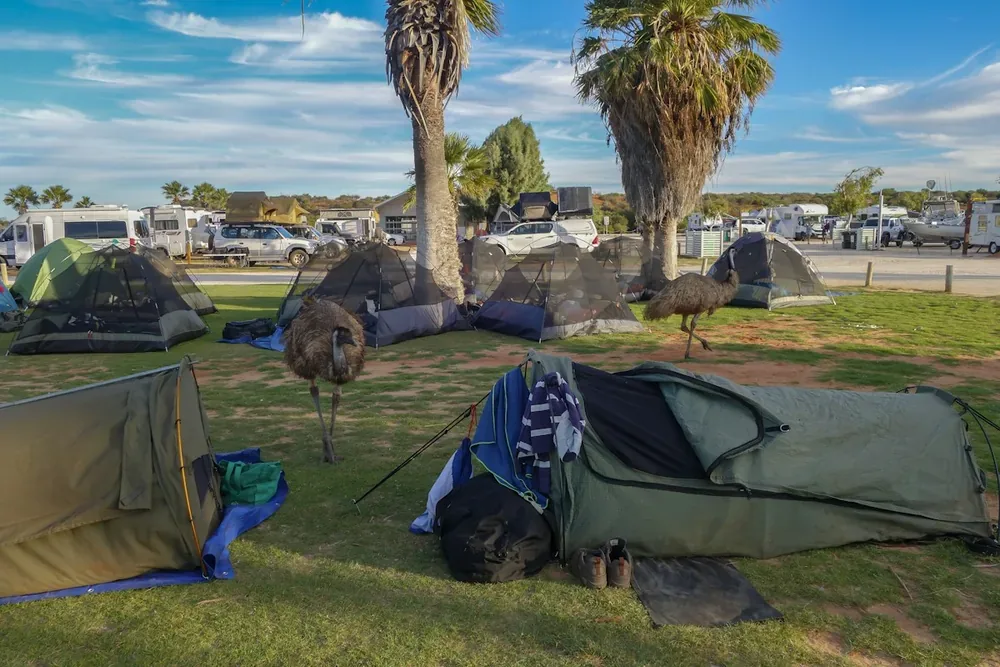
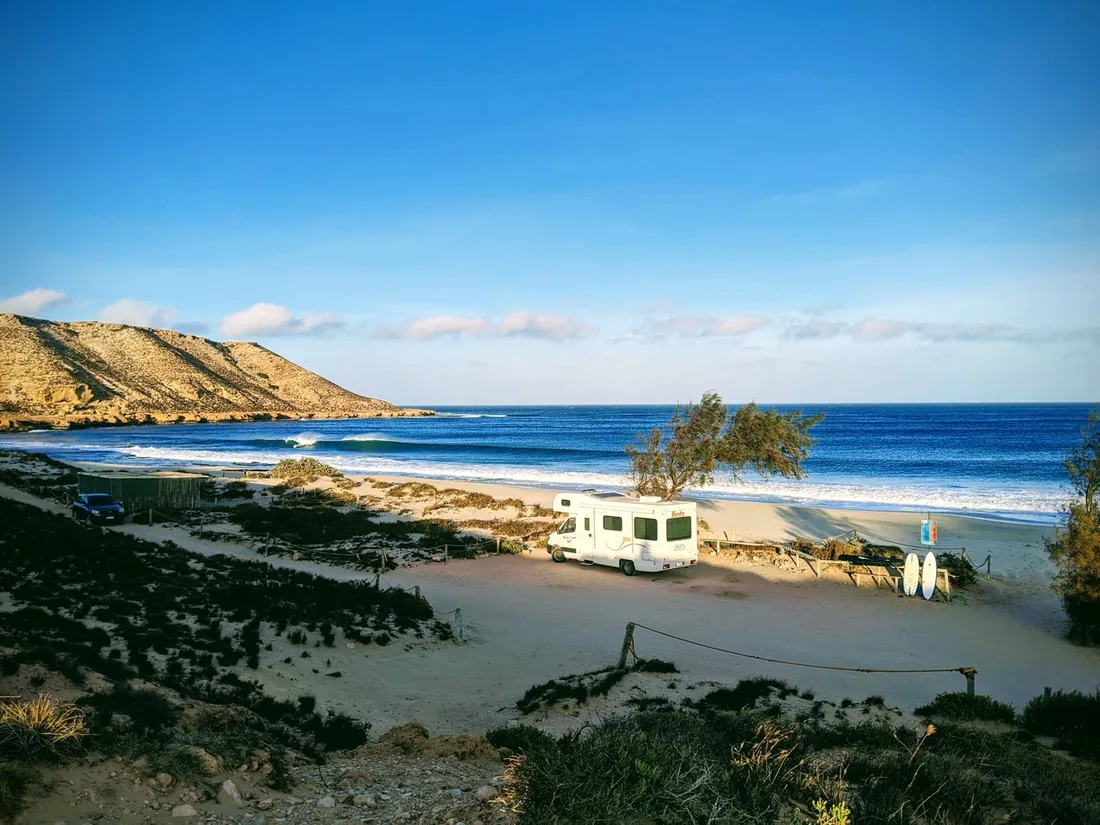
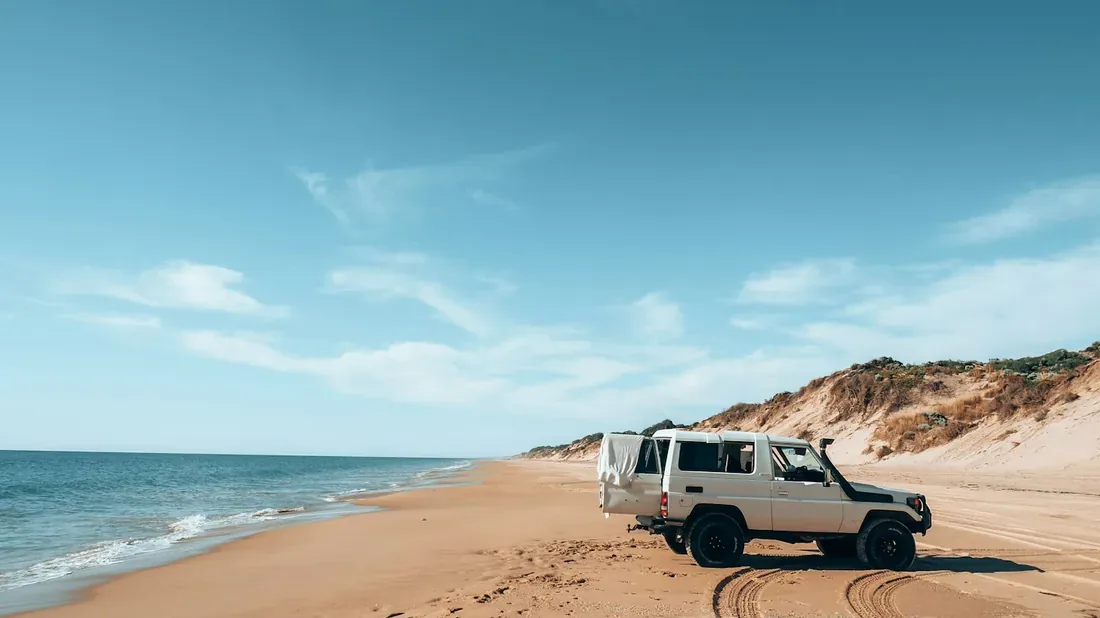
There is no single legal category called free camping in South Australia. When people search for it, they usually mean a national park or forest campsite, a stop beside the road, or a council site for self-contained vehicles. Each has a different manager and different rules, so the first job is to work out who looks after the land.
- National parks and conservation parks are run by the National Parks and Wildlife Service South Australia.1
- Forest reserves in the Mount Lofty Ranges and the Limestone Coast are managed by ForestrySA.8
- Council land, reserves and some rest stops follow each council’s own rules, and so do bush camping sites that a council runs.365
We do not say that any single place is free to camp. Where we write that a land manager charges nothing, that is the manager’s own statement, and we say whose and when we read it. Fees and rules are set by the land manager, and they change. Where our own data records no fee for a place, the place page says so and shows where that came from. Where a source does not say, we say that it does not.
Camping in national parks
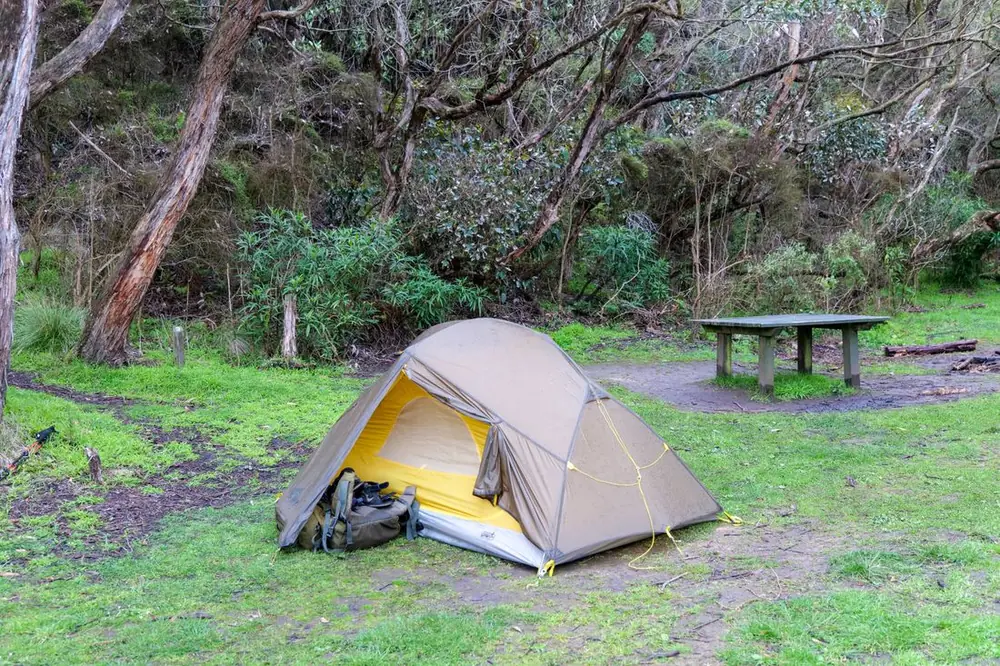
- Booking. National Parks and Wildlife Service SA says to book online or in person with its booking agents before you go, up to a year ahead. Its booking page says clear signage in parks shows that online bookings are required for camping.19
- What it costs. Campsites are priced by how many vehicles they take and by the facilities. Vehicle entry is waived with most campground bookings, except in Flinders Chase National Park. You only pay entry separately if you visit for the day.9
- Times. Check in from 1 pm and check out by 11 am.9
- Use the marked sites. Camp in designated campsites or areas. Do not tie ropes to trees.1
- Rubbish and water. There are no bins in parks, so take your rubbish with you. Water is not always available, so bring enough.1
- Toilets. If you are bush camping where there is no toilet, bury waste at least 20 cm deep, or 50 cm in sand, well away from camp sites, tracks and creeks.1
- Dogs and generators. Most national parks do not allow dogs. Ask the local parks office whether you can use a generator.1
All parks are closed on catastrophic fire danger days, and parks can close for other reasons too. Check the closures and alerts page for the park you are heading to.1
Forest reserves
ForestrySA manages public access across 33,000 hectares of forest reserves in the Mount Lofty Ranges and the Limestone Coast.8 Its camping is by booking, not open bush camping:
- Bookings must be made online. Its venues, including campgrounds and huts, are available to book from 1 April to 30 November each year.2
- Bookings close 48 hours before the date, and full payment is due at booking.10
- At Chalks, Chookarloo and Rocky Paddock campgrounds, bookings are limited to 7 consecutive days and 10 people a campsite.10
- Collecting firewood from the forest is prohibited, except in a designated collection area. Dogs are allowed only at some sites, on a lead of 3 metres or less.10
These are working forests, and ForestrySA says closures can happen with little warning. Check its page for the forest you are heading to before you go.10
Rest areas
We did not find a statewide rule that allows camping at a South Australian rest area, and we are not going to guess one. The Department for Infrastructure and Transport describes its new and upgraded rest areas on the Stuart Highway as places for road users to pull over and manage fatigue. That page does not say whether you may stay overnight.11
Councils fill the gap with their own rules. Barossa Council says it is prohibited to use any public reserve, car park, road or rest area in the Barossa region for camping or overnight stays, and that you can be fined on the spot.5 In Kimba, the council lists The Gums, a rest area on the Eyre Highway, as a free camping area, with toilets and free barbecues, no bookings and no fires.3 The same kind of place can be allowed in one council area and banned in the next, so read the sign at the stop.
Council sites and bush camping
- Kimba District Council. Its page is titled Free Camping Areas. It lists the Kimba Recreation Reserve, with three camping bays, toilets, coin-operated hot showers, free barbecues, a camp kitchen and a dump point. Stays are up to 5 days, and longer stays can be arranged with the council. Sites are first come, first served with no bookings, and there is no power and no fires.3
- Wattle Range Council. It says there are three areas where overnight stays by self-contained vehicles are permitted, free of charge. It defines self-contained as holding capacity for fresh, grey and black water plus somewhere to store rubbish, for example an on-board shower, fresh water tank, toilet and rubbish container.4
- Yorke Peninsula Council. It runs approved bush camping sites on the coast, and all of them are subject to a fee. A permit is required for every site and must be bought before you set up camp. The council says anyone camping without one may be liable to a $312.50 fine, and that the sites are designed for self-contained camping. The permit does not cover Innes National Park, which has its own booking system.6
Other councils will differ again. Check the council’s own page for the town you are staying in, and the sign at the site.
Campfires and Total Fire Bans
- Total Fire Ban. The Country Fire Service says a ban is declared for days when the Fire Danger Rating is Extreme or Catastrophic. It can be declared on any day of the year, for one or more of 15 fire ban districts or the whole state. A ban starts at midnight and lasts 24 hours. Ratings for the next day are issued between 4.30 and 5 pm. The CFS Information Hotline is 1800 362 361.7
- Fire Danger Season. It generally runs from November to April, with daily restrictions to stop fires starting.12
- In national parks. Many parks do not allow wood or charcoal fires at any time, and others allow them only at certain times of year. Check before you book. Bring your own firewood, as collecting it in a park is prohibited. On Total Fire Ban days, all fires and most barbecues, including gas and liquid fuel, are not allowed.13
- In forests. Entry to all ForestrySA forest reserves is prohibited on Total Fire Ban days. Wood fires are allowed from 1 May to 31 October, in designated fire pits only, and those dates can change when fire danger stays high.102
- Yorke Peninsula bush camps. During the Fire Danger Season, all campfires on the ground are banned in the council’s bush campgrounds.6
For the rules in every state and territory, see Total Fire Bans and fire danger ratings across Australia.
How Trek Eleven helps
Trek Eleven is a free camping app for all of Australia. For South Australia, here is what it does today:
- You can browse the map and lists with no account.
- Campsites and caravan parks from OpenStreetMap appear as unverified suggestions in their own layer. We have not checked them.
- Rest areas from the South Australian state-maintained list appear as supplied. That list does not say whether an overnight stay is allowed, so we do not either.
- Every fact shows where it came from and when. A place no one has checked says so plainly.
- You set your vehicle once, and access notes are flagged for it.
- Saved and recently viewed places open with no signal. Offline maps are coming soon.
- If something is wrong, closed or washed out, you can report it from the place page.
The app shows official warnings for most states, but they can be late, so use the official sources in the box below too. See the how it works and how we check pages, or browse Adelaide, Fleurieu and Yorke, the Limestone Coast and Riverland, the Eyre Peninsula and Nullarbor and the Flinders Ranges and Outback. Heading over the border? Read our guides to free camping in Victoria, free camping in New South Wales, free camping in Queensland and free camping in Western Australia, or see free camping across Australia for every state.
How to check a place before you stay
- Work out who manages the land: a national park, a forest reserve, a council or a road authority.
- Read that manager’s page and the sign at the entrance. A “no camping” sign settles it.
- Check the Fire Danger Rating, any Total Fire Ban and any park alerts or closures for the day.
- If you still cannot tell, ask the council or park office, or choose a place you are sure about.
Find places near you
Our region and Camping near pages list the campsites, caravan parks and rest areas on record in South Australia, from open data. Each place says whether Trek Eleven has checked it, and unchecked places are only suggestions. They do not say that camping is allowed, free or open, so read the sources above first.
Towns in South Australia
The towns in South Australia that have a Camping near page. Each lists the campsites, caravan parks and rest areas on record around the town, from open data.
Adelaide, Fleurieu and Yorke
Eyre Peninsula and Nullarbor
Flinders Ranges and Outback
Limestone Coast and Riverland
Sources
Every rule, fee and date above comes from one of these official pages, written up in our own words. We read each page on 29 October 2026; each source shows its own date. Rules change, so open the page itself before you rely on it.
- Camping in national parksNational Parks and Wildlife Service South Australia. Checked . The page shows no date.
- Accommodation & CampingForestrySA. Checked . The page shows no date.
- Free Camping AreasKimba District Council. Checked . The page shows no date.
- Camping grounds and caravan parksWattle Range Council. Checked . The page shows no date.
- CampingThe Barossa Council. Checked . The page shows no date.
- Bush CampingYorke Peninsula Council. Checked . The page shows no date of its own, and mentions the permit rules that began on 1 September 2016.
- Total Fire Bans & RatingsCountry Fire Service (South Australia). Checked . The page shows no date.
- Visit our forestsForestrySA. Checked . The page shows no date.
- Book and pay FAQsNational Parks and Wildlife Service South Australia. Checked . The page shows no date.
- Camping Terms and ConditionsForestrySA. Checked . The page shows no date.
- Remote SA rest areas boost to curb driver fatigue (news)Department for Infrastructure and Transport (South Australia). Checked . The page is dated Friday 23 October 2026.
- What can I do?Country Fire Service (South Australia). Checked . The page shows no date.
- Campfires and BBQsNational Parks and Wildlife Service South Australia. Checked . The page shows no date.
This guide is general information, not legal advice. Trek Eleven has not visited the places it mentions and does not say that any of them is open, safe or allowed.
Check before you go
Rules, fees, closures and fire bans change, and agencies can update their pages at any time. This guide is general information, not legal advice. Before you stay anywhere, read the sign on site and the land manager’s own page, and check fire bans and closures for where you are going.
- National Parks and Wildlife Service SA: camping in national parksBookings and rules
- ForestrySA: accommodation and campingForest camping bookings and fire dates
- CFS: Total Fire Bans and ratingsBans and ratings by district
- CFS: what can I do?Rules by activity
- TrafficSARoad closures and roadworks
- Parks SA closuresPark closures and alerts
- Outback roadsOutback road conditions and closures
- Bureau of Meteorology warningsStorms, floods and fire weather