The short version
- The NT Government says you must book and pay online for designated campsites in NT parks and reserves, and that you cannot pay at the park. Fees run from $10 per adult per night for a category B campground to $20 for a category D campground.12
- Visitors to the NT need an NT Parks Visitor Pass for most national parks and reserves, from $10 for an adult for one day. NT residents do not.3
- The NT Government’s road rest stops page lists many highway rest stops as “24 hour overnight camping allowed”, and lists some as “camping not permitted”.4
- Kakadu is managed by Parks Australia, not the NT Government, and needs its own park pass.5
- Check Secure NT for fire bans before you light any fire, and keep at least 50 metres from the water’s edge in the Top End.67
What free camping means in the Northern Territory
There is no single legal category called free camping in the NT. When people search for it, they usually mean a national park campsite, a highway rest stop, or a bush campground. Each has a different manager and different rules, so the first job is to work out who looks after the land.
- Parks and reserves are managed by NT Parks and Wildlife, except Kakadu and Uluru-Kata Tjuta, which are managed by Parks Australia.3
- Highway rest stops are listed by the NT Government, with the facilities and the camping wording for each one.4
- Streets, parks and reserves in a town fall under the local council and its by-laws.8
We do not say that any single place is free to camp. Where we write that a land manager charges nothing, that is the manager’s own statement, and we say whose and when we read it. Fees and rules are set by the land manager, and they change. Where our own data records no fee for a place, the place page says so and shows where that came from. Where a source does not say, we say that it does not.
Camping in NT parks and reserves
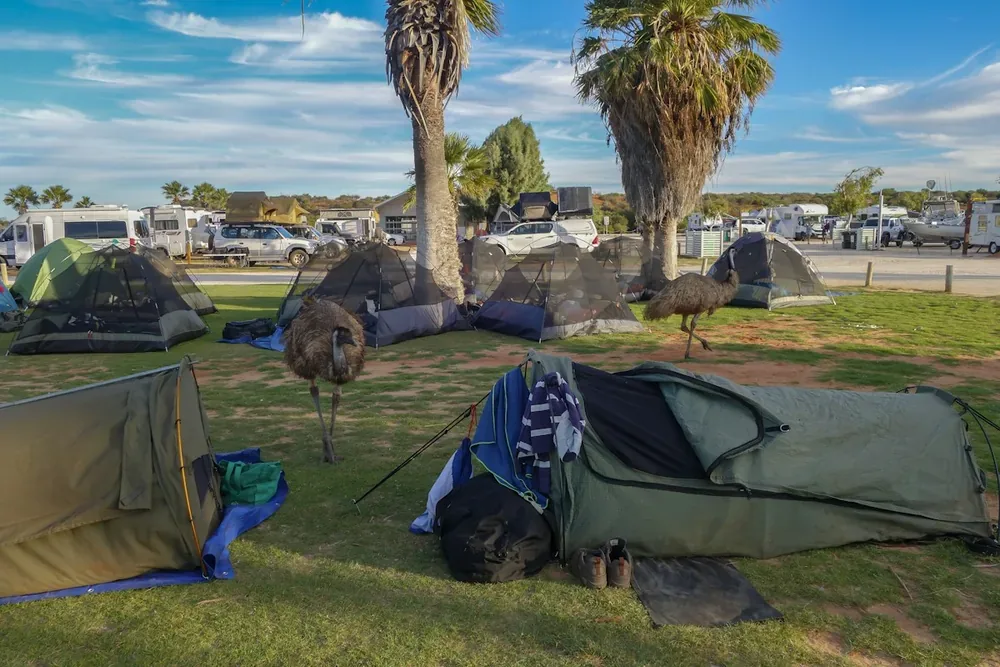
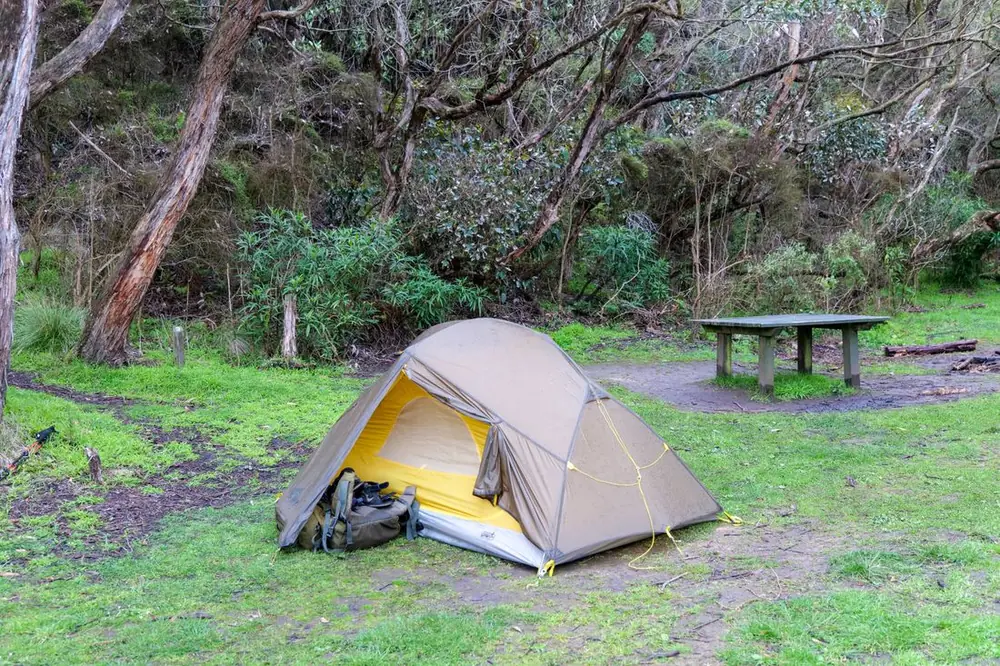
The NT Government says most parks and reserves have grounds set aside for camping, unless they are closed for seasonal weather. You must camp only in marked camping areas.1
- Booking. You must book and pay online for designated campsites, before you go. You cannot pay at the park. The booking system needs an account with a valid email address, and a credit card or Parks and Wildlife gift card.129
- Fees. They depend on the campground’s facilities. Category A is $15 per adult, $8 per child (5 to 17) or $38 per family. Category B is $10, $5 or $25. Category D, the premium locked-gate campgrounds, is $20, $10 or $50. Category C campgrounds are run by commercial operators. A family is 2 adults and 4 children. The page was last updated on 2 September 2025.2
- Generators and caravans. They are allowed only in certain campgrounds.2
- Camping outside a marked ground. You need a permit, which costs $4 per adult, $2 per child or $10 per family. There are no facilities outside designated areas. To apply, contact the permits office on 08 8999 4795. You must also tell Parks and Wildlife when you leave the park.210
- Cobourg Peninsula. You need a permit to enter and camp overnight at Garig Gunak Barlu National Park.10
- Pets. Dogs and cats are generally not allowed in national parks and reserves in the NT.7
Parks can close at short notice because of flooding or bushfires. The NT Government tells you to check that a park is open and to check the Road Report website before you go.11
The NT Parks Visitor Pass
If you are a visitor to the NT, you need a Parks Visitor Pass for most national parks and reserves, and you still pay camping and walking fees on top. NT residents do not need one but may be asked to show proof of residency. You can only get the pass online, and you must be logged in to the parks booking system first.3
- One day: $10 for an adult, $5 for a child (5 to 17), $25 for a family.
- Three days: $20, $10 and $50. Two weeks: $30, $15 and $75.
- One month: $45, $22 and $110. Twelve months: $60, $30 and $150.
- Concession rates apply with an Australian Government Seniors Card, Pensioner Concession Card or DVA Card.
The page lists the parks that need the pass, including Litchfield, Nitmiluk (Katherine Gorge), Tjoritja / West MacDonnell and Watarrka. It says some parks remain pass-free. It was last updated on 16 April 2026.3
Highway rest stops
The NT Government’s road rest stops page lists rest stops on the Stuart, Barkly and Victoria Highways and others, with the facilities at each. The wording on camping differs from stop to stop, so read the entry for the stop you plan to use.4
- Stops marked as allowing overnight camping. Many entries say “24 hour overnight camping allowed”. Examples on the Stuart Highway include Bridge Creek, King, Warloch and Newcastle Waters.4
- Stops marked as not permitted. The Stuart Highway entries for Manton Dam and Coomalie Creek say “camping not permitted”.4
- Stops with a fee. Devils Marbles and Sullivan Campground say overnight camping is allowed and that camping fees apply.4
- Stops that do not say. Some entries, such as Alexander Forrest Memorial, list no camping wording at all. Where the page does not say, we do not either.4
The page shows no date, and entries can be marked temporarily closed, so check Road Report NT and any sign on site.4
Kakadu National Park
Kakadu is managed by Parks Australia, so the NT Parks Visitor Pass is not valid there. Parks Australia says you need a Kakadu park pass, valid for 7 days, and that NT residents get passes free.53
- Pass prices. The adult pass is $40 in the dry season (15 May to 31 October) and $25 in the tropical summer (1 November to 14 May). The page says passes for visits from 1 July to 31 October 2026 are charged at the lower rate. Children, family and concession prices are on the page.5
- Campgrounds. There is no need to book ahead, as campgrounds are first come, first served and the on-site manager collects fees. Bush campgrounds are unmanaged with very basic facilities, and Parks Australia says some have a small fee while others are free.12
- Access. Kakadu is open all year, but rain and flooding can make some areas inaccessible in the tropical summer. The Kakadu Access Report gives daily updates on roads, campgrounds and visitor sites. When we read it on 29 October 2026, it showed Karnamarr campground closed in 2026 and Maguk closed because of a crocodile sighting.513
Council land and local laws
Every council makes its own rules for streets, parks and reserves. The City of Darwin says camping in public spaces is regulated under By-Law 103, which includes sleeping in a motor vehicle, campervan, caravan or tent, or in open spaces and reserves. Rangers may issue on-the-spot fines, and unaccompanied camping items may be removed and impounded. The page does not give a fine amount.8
We did not find a page with the camping rules for Alice Springs or Katherine town councils, so we do not state them. Check the council’s own page for the town you are staying in, and the sign at the site.
Campfires and fire bans
- Fire bans. When fire conditions are very dangerous, a fire ban may be declared for the whole NT or part of it. It most often starts at midnight and could last up to 24 hours. During a ban you must not start a fire in the open air, though you may still use a gas or coal barbecue.6
- Small cooking fires. During a ban, a small cooking fire is allowed only while you are cooking or boiling water, with a 4 metre clear area, someone always present, and the fire fully put out straight afterwards.6
- Where to check. The NT Government points to the Secure NT website, local ABC radio and roadside signs. The bushfire alerts page is at Secure NT.6
- Bushfire season. It runs from April to November in the Top End and October to March in Central Australia.14
- Fire danger ratings. They are published daily on the Bureau of Meteorology website.15
- Campfire basics. Light fires only in fire pits where permitted, keep them small, and collect only fallen firewood off the park.7
For the rules in every state and territory, see Total Fire Bans and fire danger ratings across Australia.
Wet season roads and crocodiles
- Roads. Check Road Report NT for government roads, including roads on Aboriginal land. For council roads, contact the council. You need a permit to enter Aboriginal land.167
- Unsealed roads. The NT Government says a four-wheel drive does not mean you can go anywhere, and that braking distances are longer on unsealed roads.7
- Crocodiles. Saltwater crocodiles can be found in fresh and salt water. The Be Crocwise advice is to camp at least 50 metres from the water’s edge, avoid places where animals come down to drink, and do washing and food preparation well away from the water.1718
- Swimming. Swim only in signed areas, and never dive or jump into waterholes or rivers.7
Free camping NT map: what a pin does and does not tell you
People who search for a free camping NT map usually want a pin they can trust. A pin tells you where a place is. It does not tell you that you may stay there tonight. The NT pages in Trek Eleven are built on that idea:
- Campsites and caravan parks from OpenStreetMap appear as unverified suggestions in their own layer. We have not checked them.
- Where a list records no fee for a place, we write “recorded as free”. That is what the list says, not a promise that camping is allowed.
Use the map to find candidates, then use the land manager’s page and the sign to decide. Start with the Northern Territory page, or look near Darwin, Alice Springs and Batchelor.
How Trek Eleven helps
Trek Eleven is a free camping app for all of Australia. For the Northern Territory, here is what it does today:
- You can browse the map and lists with no account.
- Campsites and caravan parks from OpenStreetMap appear as unverified suggestions in their own layer. We have not checked them.
- Every fact shows where it came from and when. A place no one has checked says so plainly.
- You set your vehicle once, and access notes are flagged for it.
- Saved and recently viewed places open with no signal. Offline maps are coming soon.
- If something is wrong, closed or washed out, you can report it from the place page.
The app shows official warnings for most states, but they can be late, so use the official sources in the box below too. See the how it works and how we check pages. Heading over the border? Read our guides to free camping in Queensland, free camping in South Australia and free camping in Western Australia, or see free camping across Australia for every state.
How to check a place before you stay
- Work out who manages the land: NT Parks and Wildlife, Parks Australia, a road authority or a council.
- Read that manager’s page and the sign at the entrance. A “no camping” sign settles it.
- Check your pass or permit, the fire ban for the day, park closures and Road Report NT.
- If you still cannot tell, ask the council or park office, or choose a place you are sure about.
Find places near you
Our region and Camping near pages list the campsites, caravan parks and rest areas on record in the Northern Territory, from open data. Each place says whether Trek Eleven has checked it, and unchecked places are only suggestions. They do not say that camping is allowed, free or open, so read the sources above first.
Towns in the Northern Territory
The towns in the Northern Territory that have a Camping near page. Each lists the campsites, caravan parks and rest areas on record around the town, from open data.
Northern Territory
Sources
Every rule, fee and date above comes from one of these official pages, written up in our own words. We read each page on 29 October 2026; each source shows its own date. Rules change, so open the page itself before you rely on it.
- Camping in parks and reservesNorthern Territory Government (nt.gov.au). Checked . The page's code records a last updated date of 2 September 2025.
- Camping feesNorthern Territory Government (nt.gov.au). Checked . The page's code records a last updated date of 2 September 2025.
- NT Parks Visitor Pass for national parks and reservesNorthern Territory Government (nt.gov.au). Checked . The page's code records a last updated date of 16 April 2026.
- Road rest stops in NTNorthern Territory Government (nt.gov.au). Checked . The page shows no date.
- Kakadu National Park: park passesParks Australia. Checked . The page shows no date.
- Fire bans and fire danger periodsNorthern Territory Government (nt.gov.au). Checked . The page shows no date.
- Camping safetyNorthern Territory Government (nt.gov.au). Checked . The page shows no date.
- Camping in public placesCity of Darwin. Checked . The page shows no date.
- How to use parks booking systemNorthern Territory Government (nt.gov.au). Checked . The page's code records a last updated date of 23 March 2026.
- Permits for camping overnight outside a designated areaNorthern Territory Government (nt.gov.au). Checked . The page's code records a last updated date of 25 January 2023.
- Safety and rules in parks and reservesNorthern Territory Government (nt.gov.au). Checked . The page's code records a last updated date of 2 October 2024.
- Kakadu National Park: camping and caravansParks Australia. Checked . The page shows no date.
- Kakadu Access ReportParks Australia. Checked . The page says the access report was last updated on 19 October 2026.
- Bushfire seasonsNorthern Territory Government (nt.gov.au). Checked . The page shows no date.
- Fire danger ratingsSecure NT, Northern Territory Government. Checked . The page says it was last updated 31 December 2025.
- Check road conditionsNorthern Territory Government (nt.gov.au). Checked . The page shows no date.
- Stay safe while campingNorthern Territory Government, Be Crocwise. Checked . The page shows no date.
- Crocodiles and meNorthern Territory Government, Be Crocwise. Checked . The page shows no date.
This guide is general information, not legal advice. Trek Eleven has not visited the places it mentions and does not say that any of them is open, safe or allowed.
Check before you go
Rules, fees, closures and fire bans change, and agencies can update their pages at any time. This guide is general information, not legal advice. Before you stay anywhere, read the sign on site and the land manager’s own page, and check fire bans, road closures and park closures for where you are going.
- NT Government: camping in parks and reservesBookings, fees and permits
- Road Report NTRoad closures and conditions
- Secure NT: bushfire alertsFire bans and alerts
- Kakadu Access ReportKakadu road and campground closures
- Be CrocwiseCrocodile safety
- Bushfires NTFire incidents and warnings
- NT parks: is it open?Park closures
- Kakadu National ParkPark conditions
- Bureau of Meteorology warningsStorms, floods and fire weather